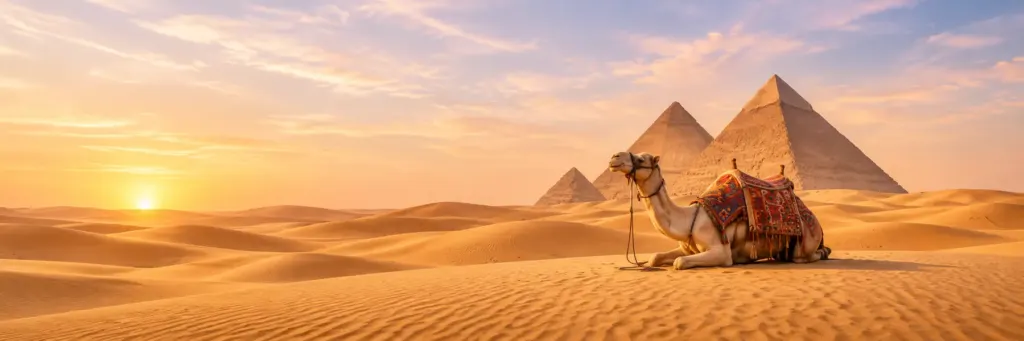
The Giza Pyramids: Where They Are, Getting There from Hurghada and Sharm, Tickets and Tips
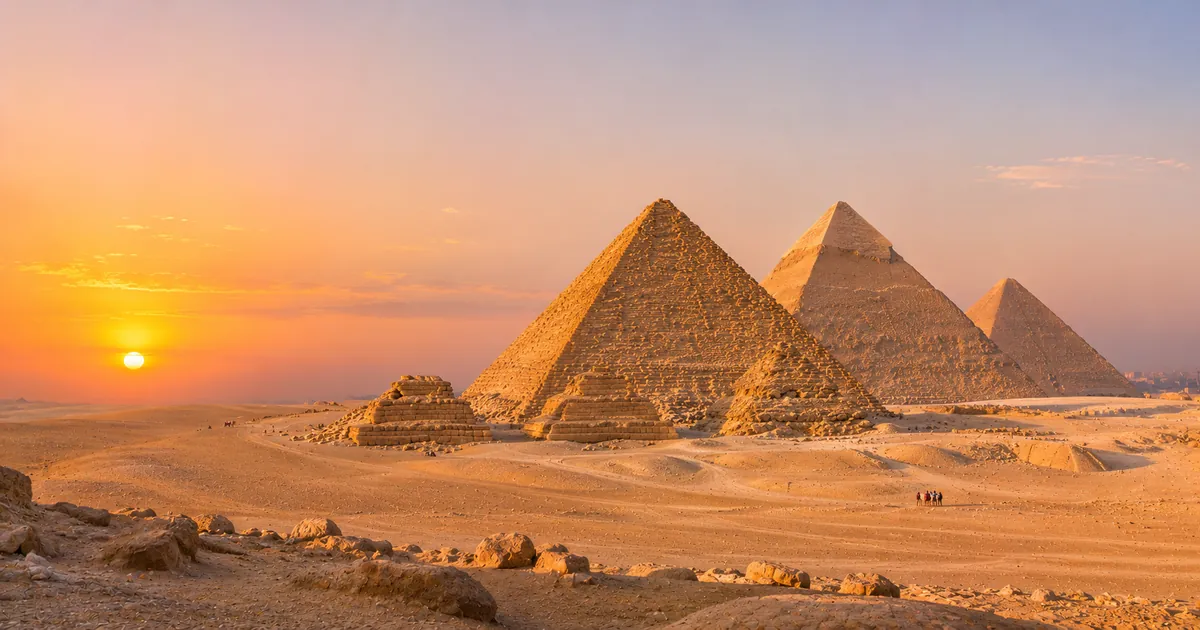
The Giza pyramids are the only one of the Seven Wonders of the Ancient World still standing. They are about 4,500 years old. The Great Pyramid is roughly as tall as a 45-storey building, and up close its scale amazes even those who know all the figures in advance. Below is everything you need for the trip: exactly where the pyramids are, how to get there from the Red Sea, ticket prices in 2026, what has changed on the plateau and how to spend the day there without unnecessary fatigue or overpaying.

Where are the Giza pyramids
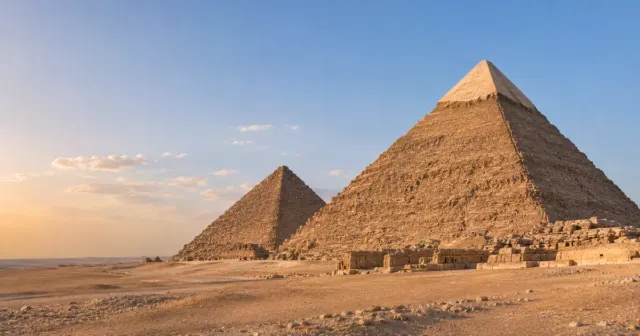
All three famous pyramids stand on the Giza plateau, a rocky rise on the west bank of the Nile. Formally Giza is a separate city, but it merged with Cairo long ago: you can see the top of the Great Pyramid from the windows of residential blocks. From Tahrir Square in central Cairo to the plateau is 15–20 km, about an hour in traffic.
The plateau is easy to find on a map: it lies on the edge of the Western Desert, right behind the last blocks of Giza. Across the road is the Grand Egyptian Museum.
What is on the plateau
- The Pyramid of Khufu (Cheops) — the largest: about 139 m today and almost 147 m originally. All about it.
- The Pyramid of Khafre (Chephren) — looks the tallest because it stands higher up the slope. Part of its casing survives at the top.
- The Pyramid of Menkaure (Mycerinus) — the smallest of the three, about 61 m, with three small queens’ pyramids beside it.
- The Great Sphinx — lies at the foot of the plateau by the causeway to Khafre’s pyramid. All about the Sphinx.
- Mortuary temples, the Valley Temple and tombs of nobles and officials.
How many pyramids are there in Egypt
More than a hundred pyramids have been found in Egypt. At Giza visitors usually see nine: three large and six small satellite pyramids. Beyond Giza, it is worth knowing Saqqara, with the Step Pyramid of Djoser — the earliest stone pyramid — and Dahshur, with the Red and Bent pyramids. They are 30–40 km to the south and far less crowded. More in our article “Dahshur and Saqqara”.
How to get to the pyramids from Hurghada and Sharm El Sheikh
Holidaymakers on the Red Sea usually see the pyramids on a one-day tour. There are three options, differing in travel time, comfort and price.
| How | From Hurghada | From Sharm El Sheikh | Best for |
|---|---|---|---|
| Group coach | ~6–6.5 h each way | ~7 h, through the tunnel under the Suez Canal | Budget travellers who sleep easily on the road |
| Minibus mini-group | ~5.5–6 h | ~6–6.5 h | No long stops or collecting guests from 20 hotels |
| Plane | ~1 h flight | ~1 h flight | Those who value time, families with children, older travellers |
Detailed timings, stops and checkpoints are in our articles “How long from Hurghada to the pyramids” and “Sharm El Sheikh to Cairo: travel time”.
Entertainment · Cairo
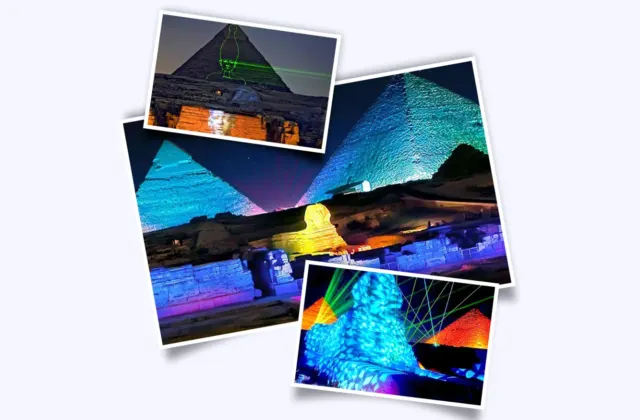
Sound and Light Show at the Giza Pyramids
- 2 hours
- Group
- Daily
Cairo & pyramids · Sharm El Sheikh
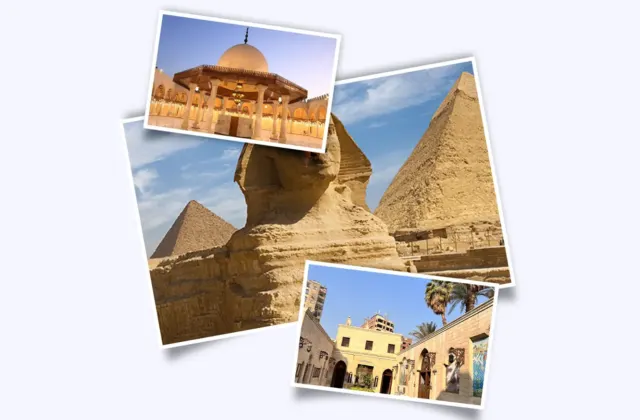
Cairo from Sharm El Sheikh in a Small Group: Pyramids, Tahrir Museum and Old Cairo
- 19 hours
- Small group
- Wed, Fri, Sun
- Kids friendly
Safari · Cairo
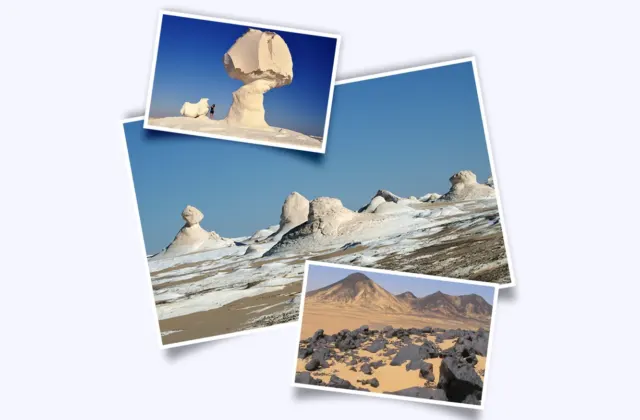
White and Black Desert in 2 Days from Cairo
- 2 days
- Group
- On request
- Kids friendly
What changed on the plateau in 2025–2026
If you have been to the pyramids before, you will not recognise the route. The old entrance by the Mena House hotel has closed. Everyone now arrives from the south, off the Fayoum road: there is a large car park, a visitor centre with ticket desks and machines (cards and pounds accepted), toilets and a café. Paying by bank card is easiest: some desks do not take cash.
Private cars and tour coaches are no longer allowed onto the plateau. Electric buses run between the stops roughly every 5 minutes: the panoramic viewpoint, Menkaure, Khufu, Khafre, the Sphinx. It has become noticeably calmer: fewer pushy sellers, less dust and less jostling at the entrance.
Pyramids ticket prices in 2026
700 pounds is about 14–15 US dollars at the late-2026 rate. Which currency to bring and where to change it is in our article “Currency in Egypt”.
A route around the plateau and whether to go inside
What to see in 2–3 hours
The electric bus and short walks let you see all the highlights without rushing. This is the order our guides find most convenient.
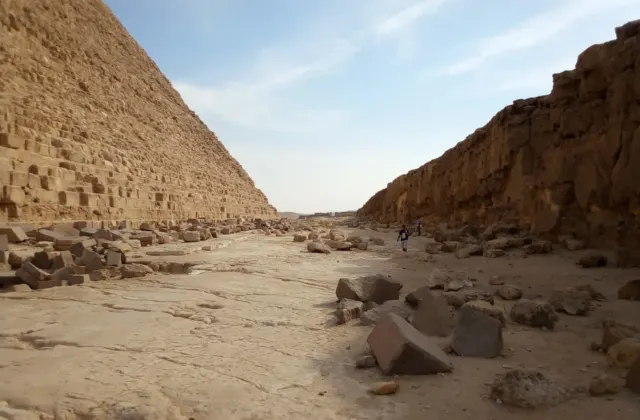
- The Great Pyramid. Start here before it gets hot and crowded. The north side has the entrance and the most impressive huge blocks of the lower courses.
- The panoramic viewpoint. All nine pyramids fit into one frame here — the classic postcard shot. Morning light is best.
- The Pyramid of Khafre. Look up at the remains of the smooth casing: all the pyramids once looked like this.
- The Sphinx and the Valley Temple. The Sphinx faces east, towards the sunrise. Good photos are taken from the terrace next to the Valley Temple.
Is it worth going inside a pyramid
This is the question travellers ask most. The answer depends on how you feel and what you expect.
For: you are inside a structure 45 centuries old. The Grand Gallery — a sloping corridor about 8 m high of smooth stone — impresses with its engineering more than anything outside. The King’s Chamber has a special silence.
Against: there are no paintings or treasures inside. The passages are low, in places you walk bent over, the climb is steep and the air is warm and humid. People with claustrophobia or heart, knee or back problems should stay outside.
If you want to look inside but the price or effort puts you off, choose the Pyramid of Menkaure or Khafre: entry is cheaper and the passage shorter. How they differ is in “The pyramids of Khafre and Menkaure”, and how it was all built 4,500 years ago in “How were the pyramids built”.
When to go and what to bring
Season and time of arrival
The plateau is open from 7:00 to 16:00–17:00, with electric buses running from about 8:00. During Ramadan it opens later, around 8:00. The best season is October to April, with daytime temperatures of 20–28 °C. From June to September it can reach 40 °C or more by lunchtime, and there is almost no shade.
The best time is the first two hours after opening: soft light, few people, not hot. Tours from Hurghada and Sharm are timed to reach the pyramids in the morning. Month-by-month weather is in “The best time to visit Egypt”.
What to bring
- Comfortable closed shoes — sand and stones underfoot.
- A hat, sunglasses and sunscreen, even in winter.
- Water: it is sold on the plateau, but at a higher price.
- Cash in small Egyptian pound notes — for toilets, tips and souvenirs.
- A light jumper for the journey: coaches and planes are cool from the air conditioning.
- Your passport or a copy — there are checkpoints on the road from the resorts.
The full list is in our “What to pack for Egypt” checklist.
How not to fall for tricks at the pyramids
Since the entrance was rebuilt there are fewer pushy “helpers”, but they have not disappeared. A few rules save nerves and money.
- Do not accept anything as a “gift”. A scarf, a souvenir or a “free” photo with a camel will be charged for afterwards.
- Do not hand your phone to strangers for a photo “from the right angle” — they may ask for money to give it back.
- Agree the price of a ride in advance, and the currency: “ten” can turn out to be ten dollars, not pounds.
- Do not climb the pyramids. It is forbidden: attempts are fined and the police may detain you.
What else to see near the pyramids
The pyramids are almost always combined with other places, so the trip from the resort is worth the drive.
- The Grand Egyptian Museum — about 2 km from the plateau. Tutankhamun’s treasures, a staircase lined with statues of pharaohs and views of the pyramids from huge windows.
- Old Cairo — Coptic churches and ancient quarters.
- A Nile dinner cruise — if you stay overnight in Cairo.
- The Sound and Light Show at the Sphinx in the evening — the pyramids lit up and the history of Egypt set to music.
What else to fit in to 1–2 days in the capital is in “Things to do in Cairo”.
Entertainment · Cairo
Sound and Light Show at the Giza Pyramids
- 2 hours
- Group
- Daily
How much a pyramids tour costs: group tour or on your own
From Cairo you can reach the pyramids by taxi or Uber in 30–60 minutes. From Hurghada and Sharm, going independently usually works out more expensive and more complicated: a night intercity bus, taxis around Cairo, tickets — all in one day. On a tour, transport, entry, an Egyptologist guide and lunch are included, and you are picked up from your hotel and brought back. Current prices are on our tour pages — pay on the day, no prepayment.
If flexibility matters, choose a mini-group or a private trip: your own pace, and you can add Saqqara or Dahshur to the route.
Cairo & pyramids · Hurghada
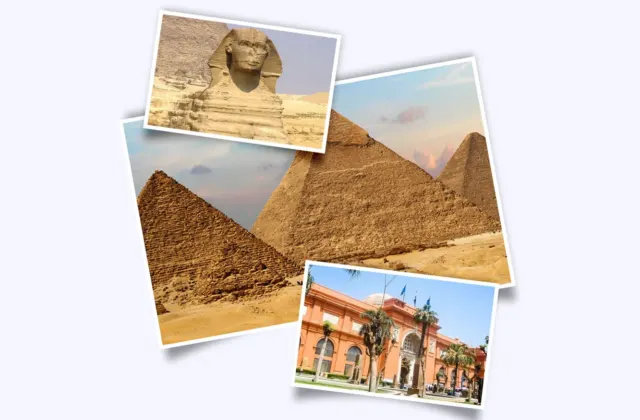
Cairo from Hurghada in a Small Group of up to 8
- 19 hours
- Small group
- Egyptian Museum (Tahrir): Mon, Wed, Fri, Sat · Grand Egyptian Museum: Tue, Thu
- Kids friendly
From Sharm El Sheikh, the most convenient option is a mini-group that includes the Grand Egyptian Museum.
Cairo & pyramids · Sharm El Sheikh
Cairo from Sharm El Sheikh in a Small Group: Pyramids and the Grand Egyptian Museum
- 19 hours
- Small group
- Mon, Thu, Sat
- Kids friendly