The Great Sphinx of Giza: Where It Is, How Old It Is and What Happened to Its Nose
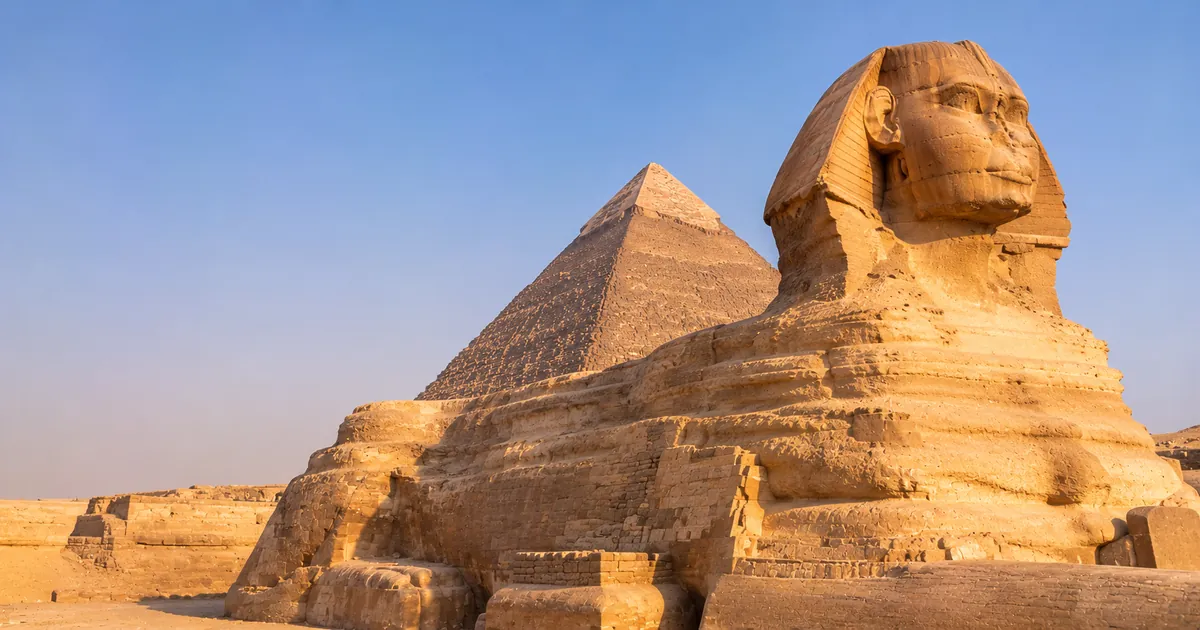
Where is the Sphinx? On the Giza plateau, next to the three great pyramids — every pyramids tour from Hurghada and Sharm El Sheikh goes there. The lion with a human head is one of Egypt’s most recognisable symbols, and in person it is even more impressive than in photos. Below: what is known for certain and what is just a good story, what happened to the nose and where to take the best pictures.
Where is the Sphinx in Egypt
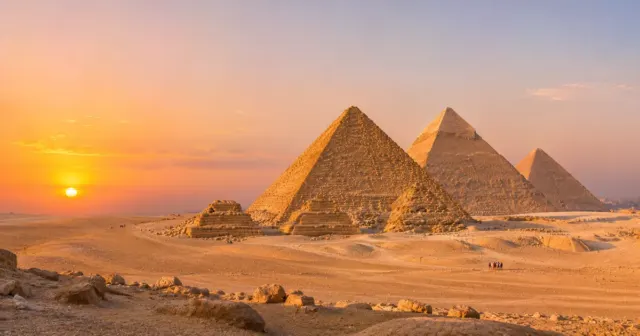
The Great Sphinx stands on the Giza plateau on the western edge of Cairo. It lies lower down the slope, by the Valley Temple of Khafre’s pyramid, and faces east, towards the rising sun. More about the plateau and the route around it in our Giza pyramids guide.
Size and age of the Sphinx
| Feature | Value |
|---|---|
| Length | ~73 m |
| Height | ~20 m |
| Width of the face | ~4 m |
| Age | about 4,500 years |
| Material | plateau limestone, carved from a single outcrop |
The Sphinx is not a statue made of blocks but bedrock that ancient craftsmen shaped where it stood. They cut away a huge pit around it and used the stone for the neighbouring temples. The paws and parts of the body were later faced with blocks.
Most Egyptologists believe the Sphinx was carved under Pharaoh Khafre, around 2500 BC, judging by how it fits into his pyramid complex. There are alternative theories of a much older age, but they have not won acceptance in the scientific community.
What happened to the Sphinx’s nose
The most popular legend says Napoleon’s soldiers shot it off. That is not true: the Danish traveller Frederic Norden drew the Sphinx without its nose in 1737, sixty years before Napoleon’s Egyptian campaign.
The medieval historian al-Maqrizi wrote that in 1378 the face was deliberately defaced by a Sufi, Muhammad Sa’im al-Dahr, who was outraged that peasants were making offerings to the Sphinx. Tool marks are still visible on the face — the nose did not fall off, it was knocked off.
The Dream Stele of Thutmose IV
Between the Sphinx’s paws stands a granite slab, the Dream Stele. It tells how Prince Thutmose fell asleep in the shade of the Sphinx, buried in sand up to its neck. In a dream the Sphinx promised him the throne if he freed it from the sand. Thutmose did so and became pharaoh. It is the first known “restoration” of the Sphinx, around 1400 BC.
Where to photograph the Sphinx
- The terrace by the Valley Temple — the classic angle: the Sphinx up close with the Pyramid of Khafre behind. This is also where people take the “kissing the Sphinx” photo.
- To the left of the Sphinx — its profile against the Pyramid of Khufu.
- In the morning — the Sphinx faces east, so its face is lit. After lunch it falls into shadow.
The Sound and Light Show at the Sphinx
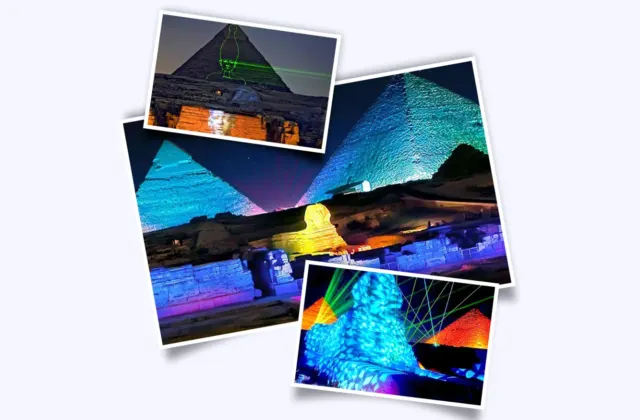
In the evening the Sphinx becomes the star of a show: the pyramids are lit up, with music and a voice narrating the history of the pharaohs. The audience sits facing the statue. The show runs in several languages on a schedule, including English — check the language of the session when booking.
Entertainment · Cairo
Sound and Light Show at the Giza Pyramids
- 2 hours
- Group
- Daily
How to see the Sphinx from Hurghada and Sharm El Sheikh
The Sphinx is included in every pyramids tour. From Hurghada it is 5.5–6.5 hours by coach or about an hour by plane; from Sharm El Sheikh, 6–7 hours by road or an hour’s flight. The programme also includes the Great Pyramid of Khufu and the Grand Egyptian Museum.
Entertainment · Cairo
Sound and Light Show at the Giza Pyramids
- 2 hours
- Group
- Daily
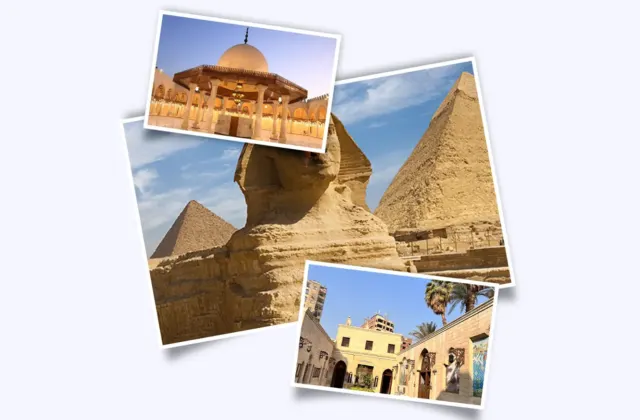
Cairo & pyramids · Sharm El Sheikh
Cairo from Sharm El Sheikh in a Small Group: Pyramids, Tahrir Museum and Old Cairo
- 19 hours
- Small group
- Wed, Fri, Sun
- Kids friendly
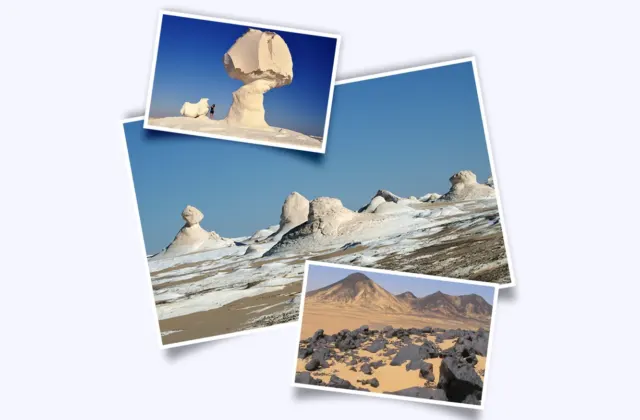
Safari · Cairo
White and Black Desert in 2 Days from Cairo
- 2 days
- Group
- On request
- Kids friendly