The Colossi of Memnon in Luxor: What They Are and Why They “Sang”

The Colossi of Memnon are the first thing travellers see after crossing to Luxor’s west bank. Two enormous seated figures in the middle of the fields look like guards without a fortress — and that is almost exactly what they are. Below: what these statues are, why the Greeks linked them to a Trojan War hero, why one of them “sang” and how to see them on a tour.
What are the Colossi of Memnon
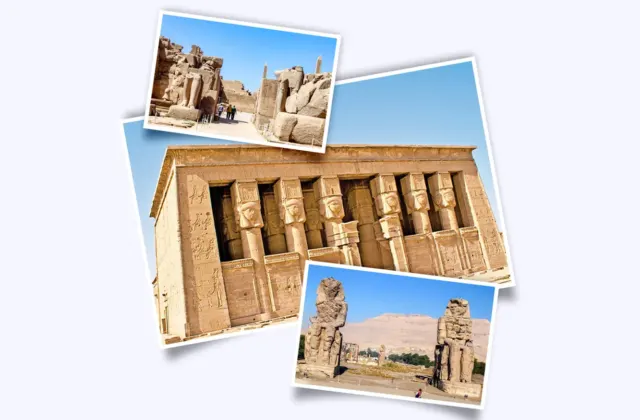
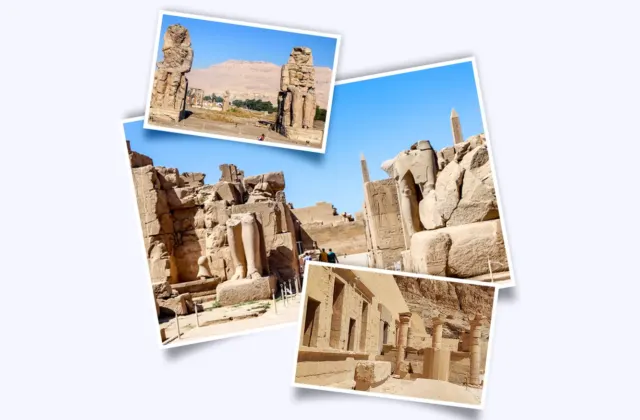
Around 1350 BC Pharaoh Amenhotep III built his mortuary temple on the west bank of the Nile — the largest in Thebes. Two seated quartzite statues of the pharaoh were placed at its entrance. At his feet are figures of his mother Mutemwiya and his wife, Queen Tiye.
The temple stood too close to the Nile: floods and earthquakes destroyed it and its stone was taken for other buildings. Only the colossi remained. Archaeologists are now restoring the temple behind them and raising new statues from the ground.
Why they are named after Memnon
Memnon is a hero of Greek myth, king of the Ethiopians and son of Eos, goddess of the dawn, who fell at Troy. Greeks visiting Egypt heard the northern statue “singing” at sunrise and decided it was Memnon greeting his mother. The name stuck, even though it has nothing to do with Amenhotep III.
The legend of the singing statue
After an earthquake in 27 BC the northern statue cracked and began to make a sound in the mornings, like a moan or a song. Roman emperors came to hear it, and ancient travellers’ inscriptions can still be seen on the colossus’s legs.
Scientists believe the sound came from the stone warming in the morning sun and moisture evaporating from the cracks. Around AD 199 Emperor Septimius Severus had the statue repaired — and it fell silent.
How long to stay and do you need a ticket
The colossi stand by the road and no ticket is needed. It is usually a 15–20 minute stop before continuing to the Valley of the Kings and the Temple of Hatshepsut. In summer, try to be here before 9–10 am: by midday the open site reaches 40 °C and there is no shade.
How to see the Colossi of Memnon
The Colossi of Memnon are part of every Luxor tour that includes the west bank — from Hurghada (about 4 hours by road), Marsa Alam, and Sharm El Sheikh (by plane). Full details in our Luxor guide.
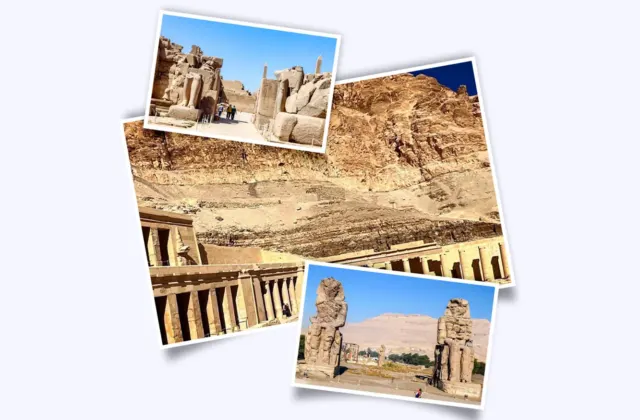
Luxor · Marsa Alam
Luxor + Valley of the Kings from Marsa Alam
- 18 hours
- Group
- Daily
- Kids friendly
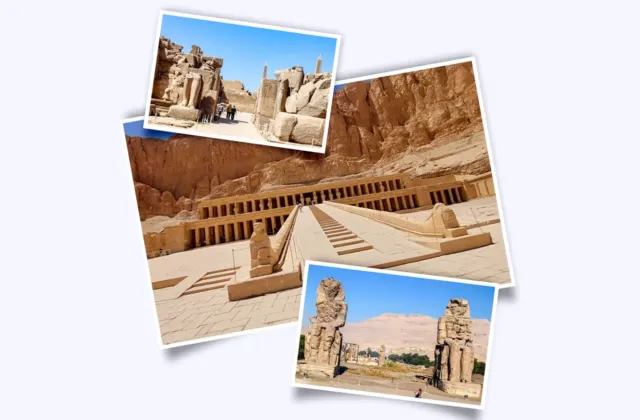
Luxor · Marsa Alam
Luxor + Valley of the Queens from Marsa Alam
- 18 hours
- Group
- Daily
- Kids friendly
If you are staying in Marsa Alam, the drive to the west bank is shorter.