What You Cannot Take Out of Egypt: Coral, Shells, Antiquities and Other Bans

An easy way to remember what you cannot take out of Egypt: nothing from the sea that is or was alive, and nothing old. Coral and shells are sold openly in the markets, but at customs it is the buyer who is held responsible. Below: the full list of bans, what happens if you break them, what you can safely take home and how to avoid trouble with money and souvenirs.
What is banned from export from Egypt
| What | Why |
|---|---|
| Coral — any, including dead coral and pieces from the beach | Protected by CITES and by Egypt’s protected areas law |
| Mollusc shells, starfish, sea urchins | Protected marine fauna |
| Turtle shells and products made from them | Sea turtles are internationally protected |
| Shark teeth, crocodile skin products, ivory | Protected species |
| Antiquities: coins, figurines, relief fragments, “old” papyri | Cultural heritage; exporting them is a criminal offence |
| Stuffed animals and birds | A permit is required that a tourist will not have |
The penalty for taking coral and shells
At minimum, confiscation at airport security. Under Egypt’s protected areas law you face a heavy fine, and for large quantities and antiquities, criminal charges. Problems can also arise after you fly: coral and shells may be confiscated on arrival at home, as the UK, the EU countries, the US and most other states are also CITES parties.
What you can — and should — bring home
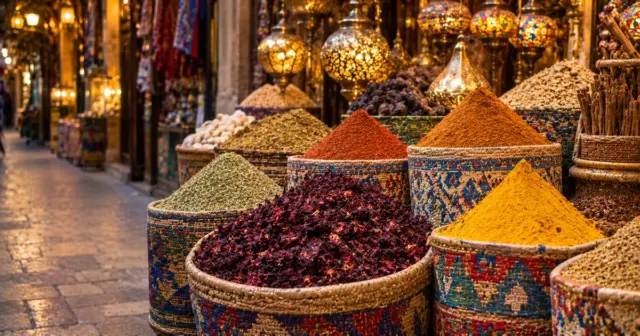
- Spices and tea — hibiscus, mint, cardamom, cumin. Easy to buy loose at the market, but carry them in sealed packaging.
- Papyrus — modern, from shops with a receipt. Real papyrus does not break when bent, while “banana-leaf” fakes crack.
- Egyptian cotton — towels, bed linen, galabeyas.
- Oils and incense — in bottles with lids, in checked luggage.
- Figurines of alabaster, basalt and soapstone — modern copies with a receipt.
- Dates, sweets and coffee with cardamom.
Where to buy it all and how to haggle is in “Hurghada’s markets”.
Money, sand and other common questions
You can take out foreign currency that you brought in; large sums should be declared on arrival. Exporting Egyptian pounds is limited, so spend or change larger amounts of pounds before you leave. More about money in “Currency in Egypt”.
A little sand in a jar usually raises no questions, but you must not take anything from protected areas such as Ras Mohammed. Alcohol and cigarettes are governed by the rules of the country you are flying to.
How to take coral home without problems — in photos
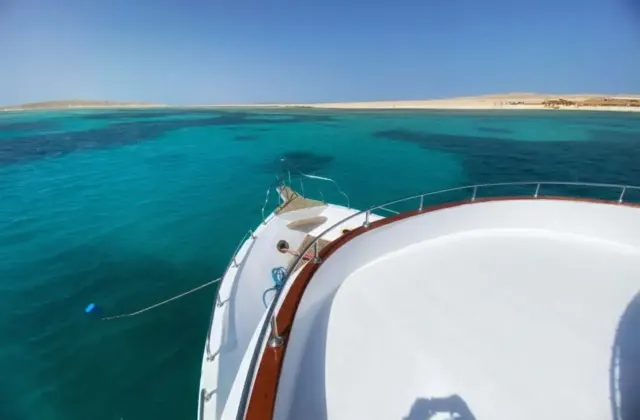
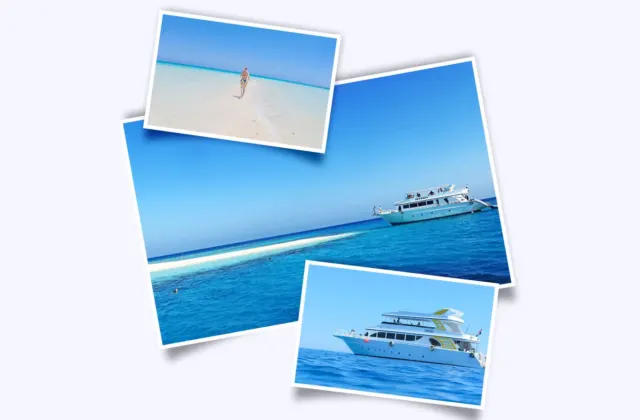
The best souvenir from the reef is photos and video. On boat trips to the islands you can film coral and fish with a phone in a waterproof case or an action camera. More about the sea in “Which sea is in Egypt”.
Sea trips · Hurghada
Amwaj Island from Hurghada — VIP Boat Trip, Snorkelling and Lunch
- 9 hours
- Group
- Daily
- Kids friendly
Sea trips · Sharm El Sheikh
Ras Mohammed + White Island
- 8 hours
- Group
- Daily
- Kids friendly