Luxor Temple: History and What to See by Day and by Night
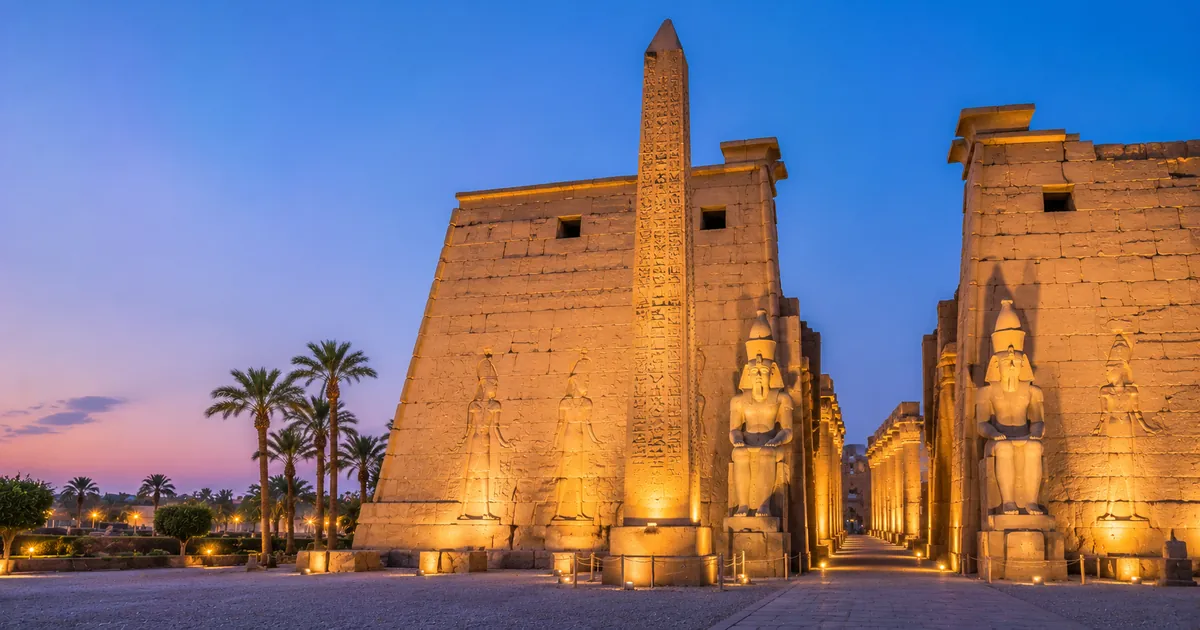
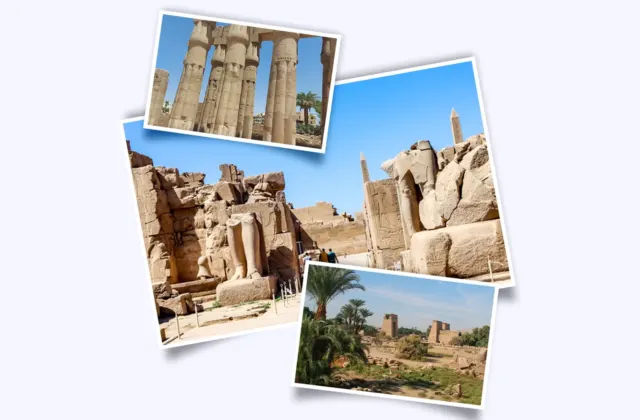
Luxor Temple is the most “urban” of Egypt’s ancient temples: it stands in the middle of modern Luxor, and a medieval mosque still functions above its courtyard. By day you can see every detail of the reliefs; in the evening the temple is lit up and looks like a stage set. Below: the temple’s history, what to see, when to come, ticket prices and what else is nearby, including the Luxor Museum.
History of Luxor Temple
The temple was built for the Opet Festival: once a year the statue of the god Amun was carried here from Karnak along the Avenue of Sphinxes and on the Nile to renew the pharaoh’s divine power. Amenhotep III laid the foundations, and Ramesses II added a huge pylon, a courtyard and his own statues.
Later it housed a Roman military camp and a Christian church, and in the Middle Ages the Abu al-Haggag Mosque was built on the sand-filled courtyard. It is still in use and sits above the ancient court — its door can be seen high on the wall, at the level of the former ground.
What to see at Luxor Temple
- The obelisk of Ramesses II at the entrance. Its twin has stood on the Place de la Concorde in Paris since 1836 — a gift from Muhammad Ali to France.
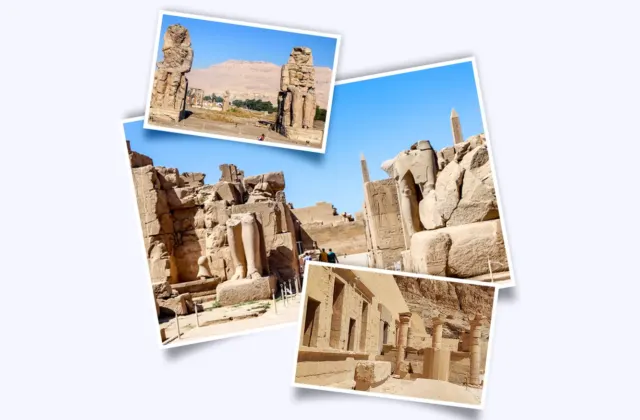
- The colossi of Ramesses II on either side of the pylon.
- The colonnade of Amenhotep III — 14 columns with open-papyrus capitals.
- The courtyard of Amenhotep III with double rows of columns — one of the most harmonious places in Egypt.
- The Abu al-Haggag Mosque above the temple.
- The Avenue of Sphinxes — 2.7 km to Karnak, open for walks since 2021.
Luxor Temple by day and by night: when to go
By day the reliefs are easy to see, but from April to October the temple is hot — 35 °C and above, with little shade. In the evening the lights come on, it cools down and the temple looks completely different.
Tickets and how much time you need
The temple itself takes 1–1.5 hours. A walk along the Avenue of Sphinxes to Karnak takes another 30–40 minutes at a leisurely pace.
The Luxor Museum and what else is nearby
On the corniche between Luxor Temple and Karnak is the Luxor Museum — small but with a choice collection: statues from the Luxor Temple cache, objects from Tutankhamun’s tomb and halls on New Kingdom Thebes. A good option if you are staying overnight in Luxor.
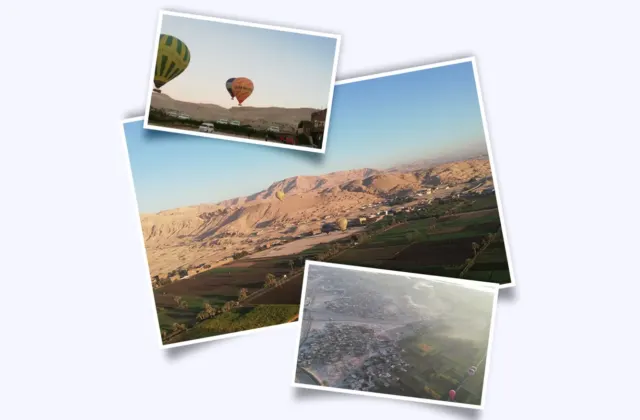
In the evening you can sail on the Nile in a felucca, and in the morning rise in a hot-air balloon over the west bank.
Luxor · Hurghada
Hot-Air Balloon Flight in Luxor from Hurghada
- overnight trip
- Group
- On request
How to see Luxor Temple on a tour
On day trips from Hurghada, Luxor Temple is sometimes replaced by Karnak because of time. If you want to see it in the evening, choose a private trip or a two-day programme. Everything about Luxor is in our Luxor guide.
Luxor · Hurghada
Private Luxor Tour (VIP) from Hurghada
- 18 hours
- Private
- On request